Our Heritage The Sacred Art of Aipan
More than just patterns, Aipan is a spiritual invocation—a geometric language of auspiciousness drawn from the red earth and white rice paste.
Origins & Materials
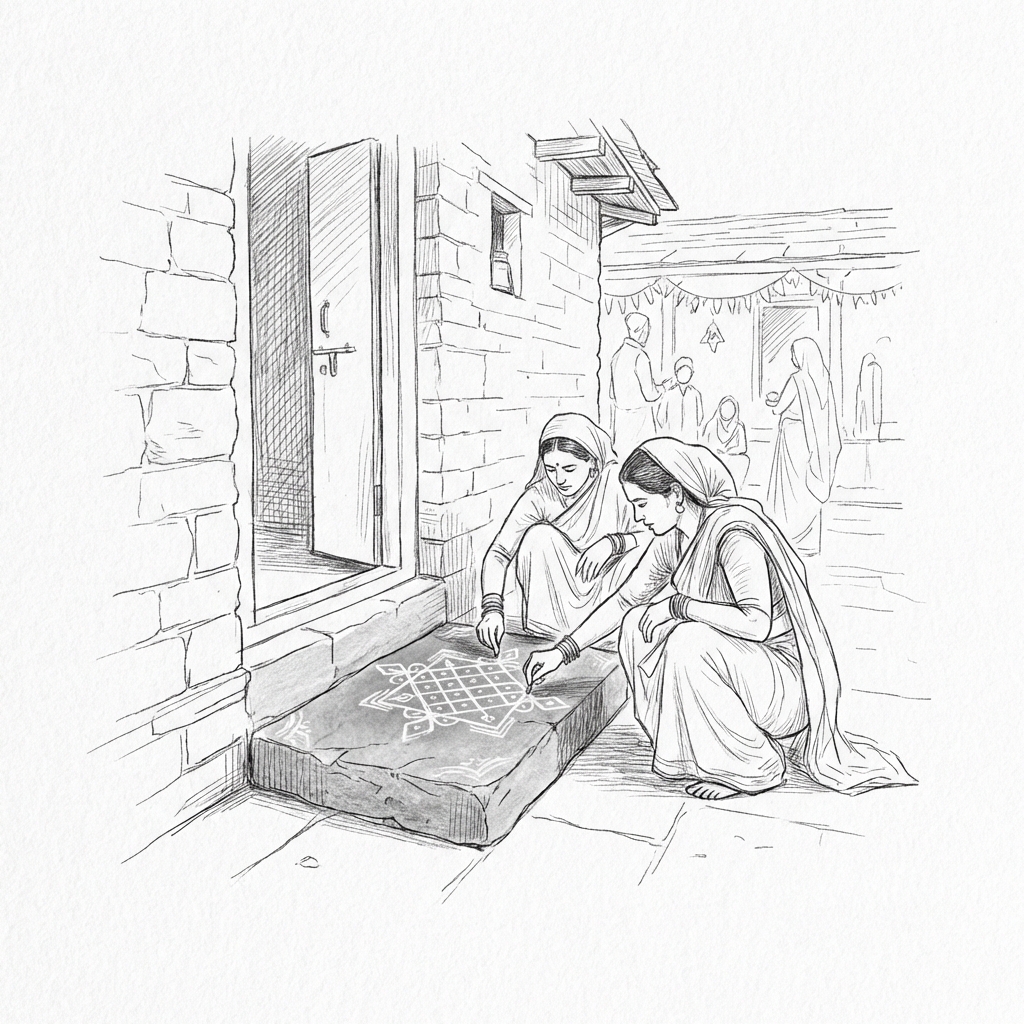
Originating from the Kumaun region of the Himalayas, Aipan (derived from the Sanskrit word Lepana, meaning to plaster) is traditionally painted on the threshold of homes and courtyards.
The art form relies on two primary natural materials:
-
Geru (Red Ochre) The background represents the earth, energy, and the material world.
-
Biswar (Rice Paste) The white patterns symbolize purity, peace, and the divine.
Significance & Motifs
Aipan is intrinsically linked to the social, cultural, and religious fabric of Kumaun. It is drawn during special occasions, festivals, and ceremonies. The central motif often features the Chowki (seat of the deity), surrounded by geometric patterns representing the universe's cosmic order.
Saraswati Chowki
Dedicated to the Goddess of Learning. Drawn slightly different from other chowkis, focusing on wisdom and education.
Vasudhara
Vertical lines drawn on the doorstep (Dehri) representing the continuous flow of wealth and prosperity into the home.